Text by Pierre-Alexandre Mateos
The rabbit does not run because he likes speed. He runs because he does not know where fear ends. He eats quickly. Drinks quickly. Keeps stopping. Every few mouthfuls, he pricks up his ears. His heart races before his legs do. He almost never looks straight ahead. Evolution has taught him to watch the sides. The margins save him; the centre remains his blind spot. He knows every exit from his burrow, every embankment, every thicket. He remembers places less than ways out.
One day, he watches the humans. They run too. They cross streets without looking up, eat standing, answer messages while chewing, drink coffee in front of a screen before disappearing behind an automatic door. The rabbit searches for the fox for a long time. He cannot find it. At first he concludes that humans must belong to an extraordinarily fearful species. Then he understands that their predator has no smell, no claws, no shape. There is no escaping it. Only obeying it.
Then he meets other rabbits. The White Rabbit checks his watch; he is already late. The laboratory rabbit learns to survive from one sample to the next. The randy rabbit turns desire into reputation. The Playboy Bunny sells fantasies. The Easter Bunny distributes commodities in the form of miracles. The farmed rabbit grows to the rhythm of the slaughterhouse. The pro-ana rabbit learns to disappear in front of the mirror. The rabbit then understands that every age breeds the species it needs. Christianity chose the lamb. Ours prefers the rabbit.
Motorway. Refrigerated truck. Hooks. Fast food. Coke Zero. Metal brace.
Electronic scales. Ambulance. Crossroads. Crust of bread. Communion wafer. At first the rabbit thinks all these objects belong to different species. Later he will discover that they live in the same burrow.
Then he meets the saints. He does not understand them. When they stop, he thinks they are dead. Paul falls on the road to Damascus. The rabbit sees only an animal that has suddenly stopped running. This seems more dangerous to him than all the foxes put together. He has never learned how to wait. The saints, on the other hand, make a technique out of stillness. Where the rabbit turns fear into movement, they turn desire into waiting. They fast. They pray. They watch hunger pass without answering it. The rabbit finds their behaviour absurd. The saints find his exhausting.
The wind shifts the sand. Dust stings the rabbit's eyes. His gaze takes in almost the entire horizon; he sees danger everywhere except directly in front of his nose.
The saint, by contrast, looks straight ahead. The rabbit has never before encountered an animal unafraid of the horizon.
Anthony leaves Alexandria. The Thebaid. Stone. Thorn. Silence. The markets fall behind him: scales, fish, figs, flatbreads, smoked meat. The rabbit follows him for a while. He waits for him to turn back towards the stalls. Anthony keeps walking.
The rabbit gives up. He cannot understand why anyone would willingly move away from what feeds them.
At first, hunger returns like a domestic animal. It scratches. It begs. It counts the hours. Then it loses its voice. The Desert Fathers tell of demons taking the form of bread. The rabbit is not surprised. Beyond a certain point, a loaf sitting on a table ceases to be food. It occupies the entire room. It draws the eye as a fox draws his. The rabbit eats in brief bursts. He returns. Stops. Pricks up his ears.
Chews again. He cannot understand how anyone could leave untouched what lies within reach of the mouth. The saint, meanwhile, discovers another way of feeding himself: letting hunger pass through the body without running after it.
The rabbit watches him for a long time. He wonders whether stillness might also be a way of fleeing.
Catherine of Siena gradually reduces her intake until she receives nothing but the Eucharist. Bread. Water. Silence. Day. Night. Chipped bottle. Pallid vase.
Cracked bowl. Prayer. Fever. Weakness. Narrow face. Cold hands. Loose dress.
Meals disappear before the body does. The rabbit follows her for several days.
Each morning, he discreetly leaves a fresh blade of grass, a young shoot, a clover flower outside her cell. Each morning, Catherine leaves them untouched. At first, the rabbit concludes that some humans feed on silence. Paul wrote: "I discipline my body and keep it under control." The theologians read this as discipline.
Doctors would call it something else. The rabbit cannot understand how the same organism can change its name without changing its hunger. Words always move faster than organs.
The metabolism slows. Or perhaps it merely stops wasting its attention. An apple.
A loaf. A drop of oil. A wisp of cooking smoke. The stomach no longer demands; it settles. The hours sink to the bottom of the day like sediment in a bottle. Fasting removes more than it refuses. A smell travels several streets. A crust lights up a table. A spring is enough. A stone is enough. An outstretched hand is enough. As in Cézanne, the whole world suddenly fits inside a handful of objects. The rabbit stops running for a moment. The foxes continue their rounds. He remains still. To his surprise, he discovers that a puddle contains more sky when one takes the
time to look at it. Smells become longer than distances. Stones acquire relief. The wind ceases to be an obstacle and becomes a direction again. He had thought stillness belonged to dead animals. He discovers that it, too, has a speed. From that day on, he sometimes takes the risk of smelling before he runs.
Someone who has been walking for several days no longer looks at a city like a stroller. They no longer read the same signs. Monuments disappear behind bakeries. Squares behind markets. Shop windows behind bins. The homeless know when restaurants close, the backyards of bakeries, the benches that hold the sun until evening, public taps, station toilets, food distributions run by the Secours populaire, the Red Cross soup kitchens. The fox knows the territory. The rabbit inhabits the passages. He owns nothing; he memorises openings, badly closed gates, embankments, hedges, corridors, margins. Humans draw maps out of streets. The rabbit draws them out of escape routes. Hunger never merely crosses a city; it reveals a second one, invisible to those who are still eating. The body very quickly pares down cultural ambitions. First it learns where to drink, where to sleep, where to get warm, where to find a crust of bread. The rabbit immediately recognises this geography. It resembles the one he has always inhabited.
Coffee. Rice. Lentils. Tinned food. Soap. Toothpaste. Razor. Socks. Underwear.
Blanket. Always the same objects. Almost never a lemon, a peach, a few fresh herbs, a ripe tomato, a cheese still running, a piece of fish, a meal shared with others. Poverty takes away less in calories than in cuisine. It erases seasons, recipes, invitations, conversations, until taste itself disappears. The rabbit studies these provisions for a long time. He searches them for the smell of gardens. He finds only the smell of packaging. He brings a few dandelion leaves anyway. No one eats them. Then he understands that there are hungers that no longer seek merely to fill a stomach. In the end, they alter the very way one inhabits the world.
The smell of white rice, its starch washed away after repeated rinsing in a sink, travels several streets. The sound of a knife on a chopping board becomes almost painful. Deprivation strips reality bare. It peels away layer after layer until only a few indispensable objects remain. The rabbit immediately recognises this way of seeing. He too can distinguish a trembling leaf from dozens of metres away.
Hunger does not so much sharpen the senses as eliminate everything else.
Gradually, the rabbit stops recognising the landscape. He discovers that one can also die by ceasing to run. Until then, he had believed that all hunger commanded one to search. He learns that there are hungers that command one to stay. Some pursue prey. Others pursue an idea. He will have known both.
Bobby Sands soon had nothing left but his own metabolism. Each day without food became a unit of time more eloquent than a speech. In his cell, the little excrement his body still produced was smeared across the walls. The last material available. The last ink. The wall became a page. Metabolism, a political language. As his body faded, his presence spilled beyond the prison. Weakness ceased to be a form of disappearance; it occupied public space. A stubborn slowness. The rabbit waits for several days outside the cell door. Every morning, he brings a few fresh leaves. Bobby Sands never takes them. The rabbit leaves without understanding. The next day, he returns. It takes him a long time to accept that some forms of hunger refuse precisely what might appease them.
An almost empty plate remains on the table. No one clears it away. The rabbit waits again. For a long time. He thinks he recognises the silence of the cells.
Then a vibration passes through the wood. It is neither the wind in the grass nor the footsteps of a fox. It is a phone. He circles the object. Sniffs it. Brings it a leaf.
Waits for it to eat. Nothing. Then the screen lights up. The rabbit leaps back.
Hunger has changed its object. Hands no longer reach for bread; they reach for an interface. They slide across the glass, open an app, hesitate for a second, begin again. The meal starts long before the first bite. It starts with a thumb. The rabbit watches the humans. They gaze at their hands with the same intensity with which the saints gazed into the desert.
He is no longer looking for carrots. He refreshes his burrow. At first, he mistakes the phone for an animal. Then for a burrow. A burrow that feeds without smell, without soil, without seasons. He returns to it several times a day. The creature never chases its prey. It waits for them. The fox no longer even needs to emerge from the grass. The rabbit calls this working. Then communicating. Then living.
One morning, he forgets that he ever had another name for it.
Are we still hungry for food, or only for its promise?
The images scroll past with an almost liturgical regularity. Cheese stretches until it becomes an elastic substance. Steam escapes. A drink froths in a glass filled with ice. Food is no longer photographed; it is dissected. The cameras linger less on what will be eaten than on what can be desired. I am no longer looking at a meal. I am looking at a hypothesis of satisfaction.
Fairground barkers knew this mechanism. So did Barnum. They always promised a body larger than life. Sword swallowers. Bearded women. Giants. Tiny children.
Siamese twins. Fire-breathers. Glass eaters. The man who swallowed light bulbs.
The fattest woman in the world. The rabbit boy. Pie-eating contests.
Hot-dog-eating contests. Watermelon-eating contests. Chili-eating contests. The fairs knew that audiences came less to watch someone eat than to see how far a body could still be made to yield. At first, the rabbit thinks he has entered a bestiary. He looks for the cages. He looks for the keepers. Then he discovers that the monsters buy tickets like everyone else. He understands that humans pay to watch what devours them. He looks for an emergency exit. The humans look for a better seat. The rabbit boy never comes out of the hat. He sells the tickets now.
A camera. A table. A mouth. Then millions of views. The titles grow as fast as the portions. XXL. GIANT. IMPOSSIBLE. Language puts on weight before bodies do.
The videos barely show meals anymore. They show images that already know they will be watched.
Joey Chestnut eats seventy-six hot dogs in ten minutes. The rabbit counts to twenty. Then thirty. Then fifty. He gives up. He discovers that humans have invented a way of eating that no longer requires hunger. The record replaces appetite. The stomach ceases to be an organ. It becomes a spectacle. Barnum would have recognised his heir.
Microphones record the crunch of breading, the breath between mouthfuls, ice knocking against a glass. These sounds seek less to reproduce a meal than to persuade the body that it is already eating. Mastication almost precedes appetite.
The rabbit then discovers something that seems impossible to him. Humans now digest images. Food follows a few minutes behind. He thought provisions filled burrows. Now they fill screens. The fox eats rabbits. Humans eat their images first.
Food proliferates at the precise moment when eating becomes suspect. Recipes, calories, protein, mukbangs, photographs, menus, advice, prohibitions: never have we talked so much about food. We watch others eat, then watch them not eat, then learn from them what we ought to desire and what we ought to know how to renounce. Rivalry has simply changed its object. It is no longer merely a matter of possessing more, but of managing to need less. Our civilisation may not be anorexic despite its obsession with food. It is anorexic because it is obsessed with it.
No one is hungry. Everything is food. No one is bored. Everything is boring.
Ubu does not devour because he is hungry. He devours because he does not know where to stop. No one asks why anymore. More is added.
Then something withdraws. Flavours cease to distinguish themselves. Sugar becomes a temperature. Fat a texture. Salt a fatigue. And still we continue. The hands work by themselves, with the autonomous intelligence acquired by repeated gestures. Somewhere, a packer seals a paper bag. A scooter waits at a red light. A notification appears. The next meal already exists.
The rabbit always knows several ways out. For a long time, they saved his life.
The apps offer him several ways out too. He takes them all. They lead back to the same burrow. At first, he thinks he is lost. Then he understands that he is going in circles. Still, he continues. No one has explained to him that a loop can look like a refuge.
In 1995, Princess Diana speaks of bulimia as a "secret disease." The rabbit thought images made things more present. He discovers that they can also make them disappear. A silhouette. A zip. Nylon tights. A changing room. A toilet cubicle. A bottle of water. A mirror. Glamour and shame sometimes use the same accessories. Only the speed at which one passes through them changes.
TREATMENT SHEET
Eating disorder (ED). Definition. Persistent disturbance of eating behaviour.
Restriction. Binge eating. Self-induced vomiting. Distorted body image. Metabolic complications. Comorbidities. Variable prognosis.
Clinical record. BMI below 18.5. Bradycardia. Hypothermia. Low ferritin.
Osteopenia. Iron deficiency. Calvin Klein Obsession. The white shirts of Jil Sander AW96. The grey nylons of Helmut Lang SS97. Davide Sorrenti's diaries. Bodies caught at angles. The Face by Corinne Day. Pearl grey. Mark Borthwick. Matt grey. Martin Margiela's overlong sleeves. Wet hair. Dark circles. Hospital light.
Direct flash. Aphex Twin's Rhubarb. Electronic scales. Wall mirror. Daily weigh-in.
History. Synchronisation. Hydration. Ingestion. Insufficient mastication.
Swallowing. Gastric distension. Hyperglycaemia. Insulin secretion. Dopamine spike. Mild tachycardia. Temporary relief. Relapse.
Physiology never reads prescriptions. Thirty-seven degrees. Hydrochloric acid.
Lipids. Starch. Caffeine. Nicotine. Carbon dioxide. An ice-cold can meets a mass that is still warm. The teeth have already forgotten what they have just crushed.
The tongue pursues a flavour the oesophagus has already lost. One mouthful calls for another before the first has even disappeared. Nothing remains long enough to become a meal.
Prescription. Weigh. Count. Divide. Replace. Remove. Tolerate. Forbid. Calculate.
Recalculate. Observe. Compare. Archive. Scan a barcode. Compare portions. Add calories. Subtract grams. Read the macronutrients. Accept the terms and conditions. Close the app. Zero sugar. Zero fat. Guilt-free.
Acute episode. Elapsed time: six minutes. Hyperventilation. Hypersalivation.
Diaphragmatic contractions. Gastric reflux. Kneeling position. Ceramic tile. Acid.
Oesophagus. The knuckles whiten. Food returns unrecognisable, half-digested, altered by the body's internal heat without ever having ceased to belong to the outside. Inside and outside exchange places. The smell lingers long after silence returns.
The rabbit enters the laboratory. For more than a century, he has been the laboratory animal par excellence. He is entrusted to toxicology, ophthalmology, immunology, reproductive science, endocrinology, pharmacology. For a long time, he learned to survive predators; now he is asked to survive protocols. He does not understand why gloved hands feed him with such precision. He mistakes them for carers. They take samples. They inject. They observe. The rabbit thinks medicine is a species of predator that kills very slowly. Then he remains still long enough to understand that it measures what it is trying to save. He becomes a protocol. A curve. A dosage.
Lack has shifted. It no longer resides in the stomach but in an interval that is difficult to locate: between the mirror and the scales, between the number displayed and the sensation experienced, between a needle and the morning reflection. Compulsion has the regularity of a procedure. Same time. Same sink.
Same white light. Same glass of water. Same promise to stop tomorrow. The rabbit still thinks it is a burrow. He does not understand why every exit leads back to the same refuge.
Under constant compression, time itself eventually gives way. What once took hours — eating, digesting, absorbing, eliminating, forgetting — is now condensed into a few minutes. The mouth acts before the decision. The hand before desire.
The stomach before thought.
Diagnosis. The disorder no longer concerns food alone. The patient presents with a chronic intolerance of intervals. Every wait becomes a symptom. Every feeling of satiety an anomaly. Every acceleration brings temporary relief. Time is now the first substance the organism fails to metabolise. The rabbit does not understand this illness. No animal falls ill from having waited.
The rabbit no longer remembers the fox. His body, however, is still running.
Biologists would call it a flight reflex. We call it responsiveness. Vocabulary changes faster than the nervous system. Agility is no longer a means of survival.
It has become a form of hygiene. A daily discipline. Waiting seems suspicious, almost obscene. Nineteenth-century moralists condemned idleness; ours condemn latency. Every unproductive second feels like a debt owed to an invisible machine. No physiology textbook predicted that a teenager would one day devour a meal the way one refreshes a webpage.
The rabbit thinks he has outrun the fox. He does not understand that the race has changed masters. Danger no longer chases bodies; it sets their pace.
The rabbit eats in small quantities, almost without interruption. He knows nothing of lunch. Nothing of dinner. A blade of grass. A sound. Another blade. A rustle. He suspends his hunger rather than satisfying it. We have turned this physiology into an organisation of the world. The meal no longer has a place. It circulates with commodities, information, bodies. A mouthful. A reply. A sip. A notification. Another mouthful. Nothing stops anymore. Even chewing becomes a form of transit. Speed no longer connects two places; it erases the interval that separated them. The meal ceases to be a pause. It becomes one circulation among others. The rabbit waits for the humans to stop and eat. They never do. He concludes that they must never really be hungry. Then he discovers that they have invented substances capable of replacing the pause: no more hunger. No more fatigue. Sometimes even no more sleep. Pervitin. Benzedrine.
Methamphetamine. The molecules change. The promise remains: to work longer than the organism can. Battlefields knew them. Factories perfected them.
Warehouses normalised them. Platforms made them invisible.
The rabbit watches them run without a fox.
I was not eating.
I was refreshing my organism.
At first he thinks it is a miracle. Then he understands that the most efficient machine is the one that persuades its prey to call their flight freedom. Stimulants promise less energy than the abolition of the body's limits. Even the fox stops to eat. Humans do not.
I thought I had an eating disorder. I was reproducing something else. Swallowing before I was hungry. Replying before I had understood. Coming before I had met.
Regretting before I had lost. Mouth, hand, eyes had stopped consulting the rest of the body. Each now worked on its own account.
Interchanges no longer run only through cities. They run through gestures.
Loading bays, conveyor belts, cold-storage rooms, sorting centres, servers, kitchens without dining rooms, satellites, ports, glowing screens at three in the morning: I found them all again in my own metabolism.
Perhaps we have not accelerated. Perhaps we have merely learned to fear anything that still has a duration. A scar. A digestion. An encounter. A season. A convalescence. A period of mourning. The body remains trapped in a temporality the rest of the world already regards as a delay.
Waiting becomes embarrassing. Hesitation begins to look like weakness. Silence resembles a malfunction. Even the night now works in successive shifts.
Warehouses stay lit. Markets open before alarm clocks go off. Kitchens prepare meals for customers who are not yet hungry.
The rabbit still knows several ways out. He takes them all. They lead back to the same rabbit cage. He scratches at the walls. He mistakes automatic doors for burrows that open by themselves. He does not understand why humans build burrows with no way out. Sometimes he stops. Pricks up his ears. No fox. Only the hum of machines. Then he starts running again.
I was not trying to go fast.
I was trying never to wait.
There is a soundtrack to this civilisation. Avicii: pre-compressed euphoria, a permanent build-up, emotion calibrated for crowds that no longer have time to pass through melancholy. The rabbit hears this music as an alarm signal. He starts running before he has even identified the danger.
Perhaps bulimia was nothing more than this music turned into physiology.
Under constant acceleration, the body ceases to be a promise. It becomes recalcitrant matter. Rules precede sensations. For centuries, flesh still promised some kind of truth. Grünewald's Christ suffered in order to make visible something beyond himself. We no longer ask the body to reveal anything; we simply want it to respond. This is what makes Marina de Van's In My Skin so disturbing. The blade seeks neither ecstasy nor scandal. It checks. It asks whether the body still offers resistance. Each cut measures a delay. I recognise this logic without ever having held a scalpel. Eating to the point of pain. Vomiting to the point of spasm. Weighing oneself several times a day. Reducing one's existence to a few hundred grams. It is no longer a matter of purifying the flesh or profaning it. It is a matter of forcing it to produce a response. Platforms react within milliseconds; a wound takes weeks, a scar several seasons. Tissue persists in a temporality that nothing can accelerate.
The rabbit has been teaching anatomy for a very long time. He is a bad teacher.
Every year, he begins his course with the neck. The students disappear before the second lesson. Humans call this whiplash. He prefers to call it a very nasty surprise. A twist. A second. Then nothing. For a long time, he thought, the fox was enough. Humans decided the method was too artisanal.
For a long time, cutting was a craft before it became an industry. The blade distinguishes more than it destroys; it follows a tendon, skirts a bone, separates one fibre from another. Butchers made an animal divisible. Slaughterhouses make it calculable.
The rabbit calls any fox who draws before killing an "engineer." At first, he assumes the plans are meant to protect the prey more effectively. It takes several visits before he understands that the animals are never the ones with degrees.
Since then, he has been deeply suspicious of plans.
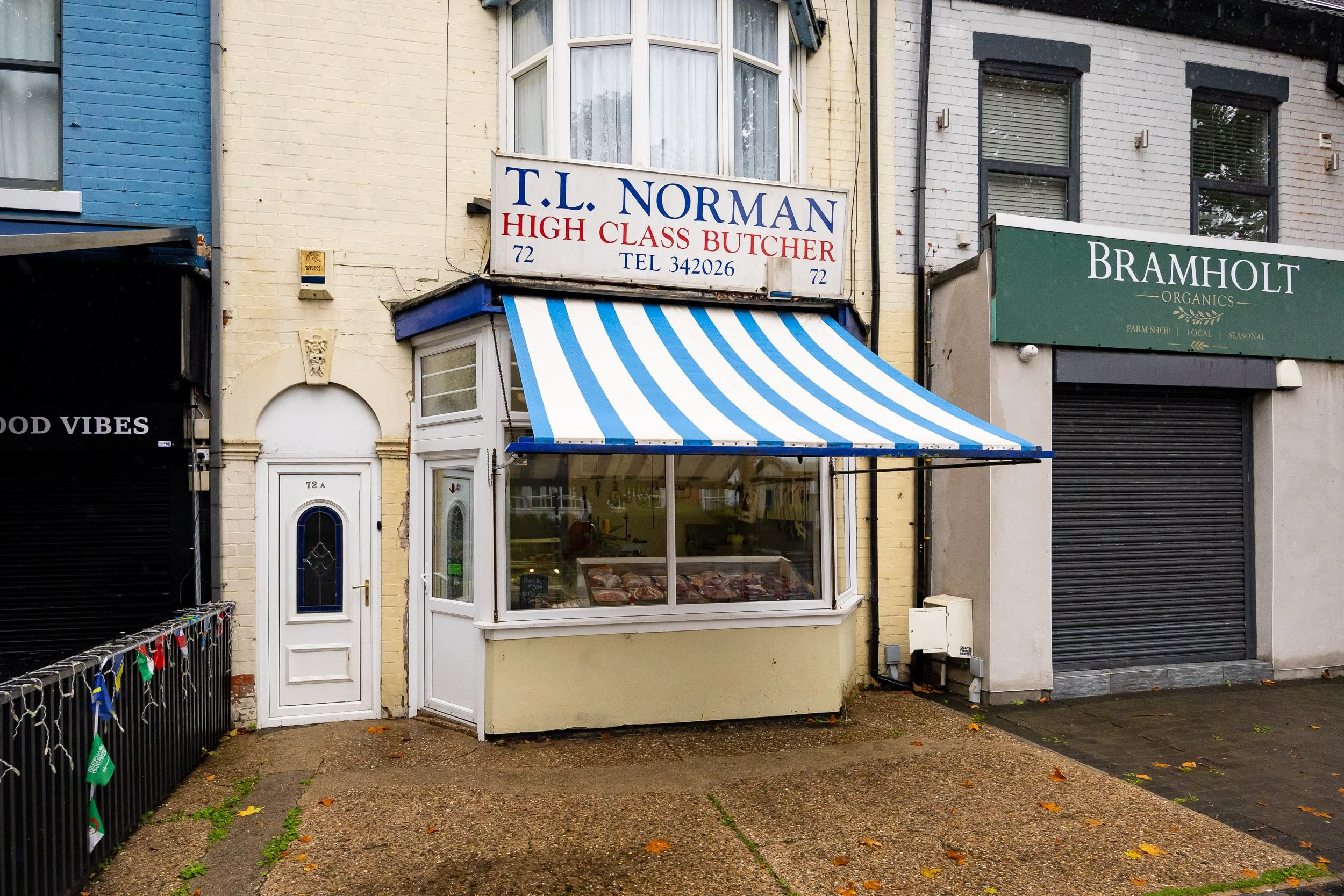
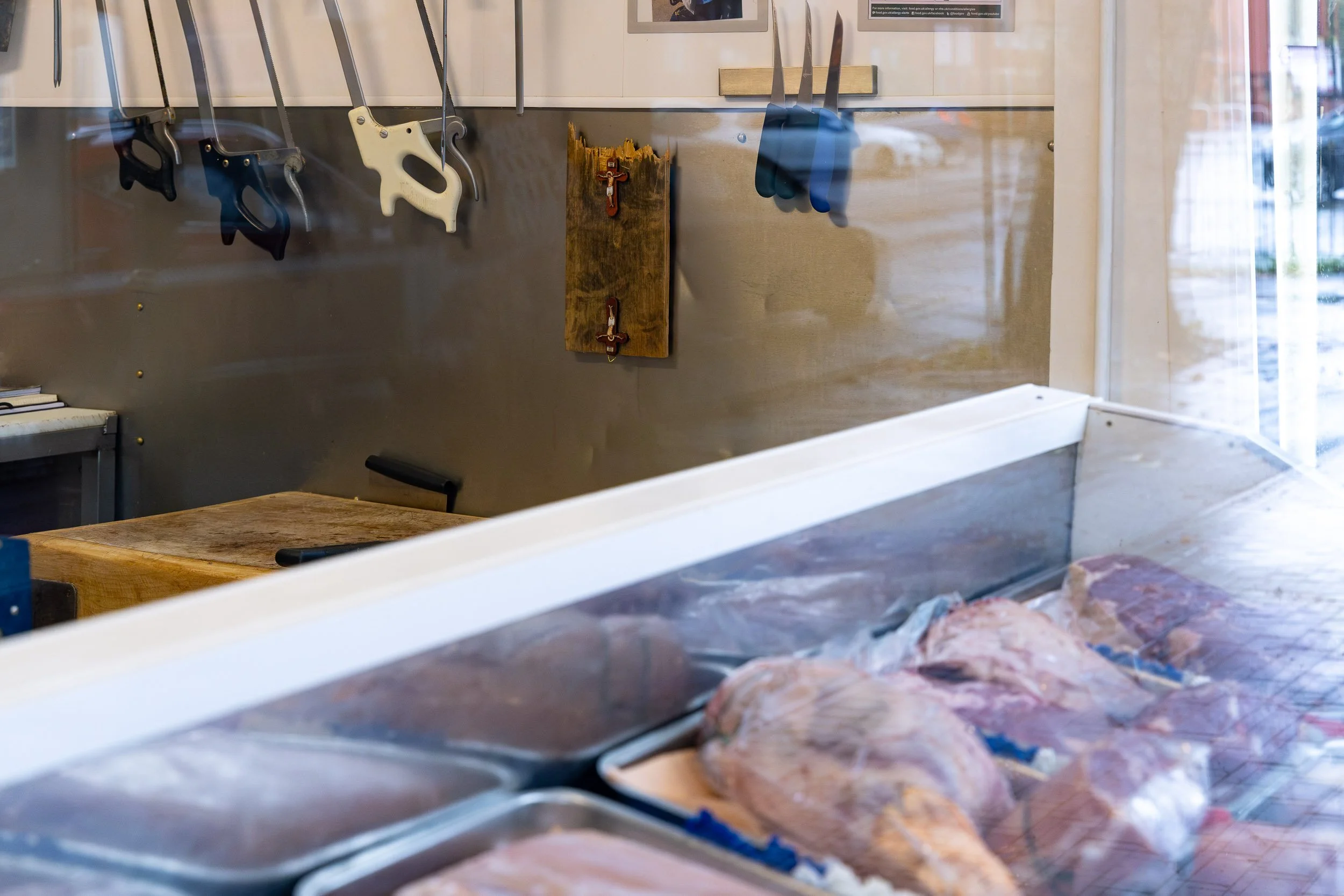
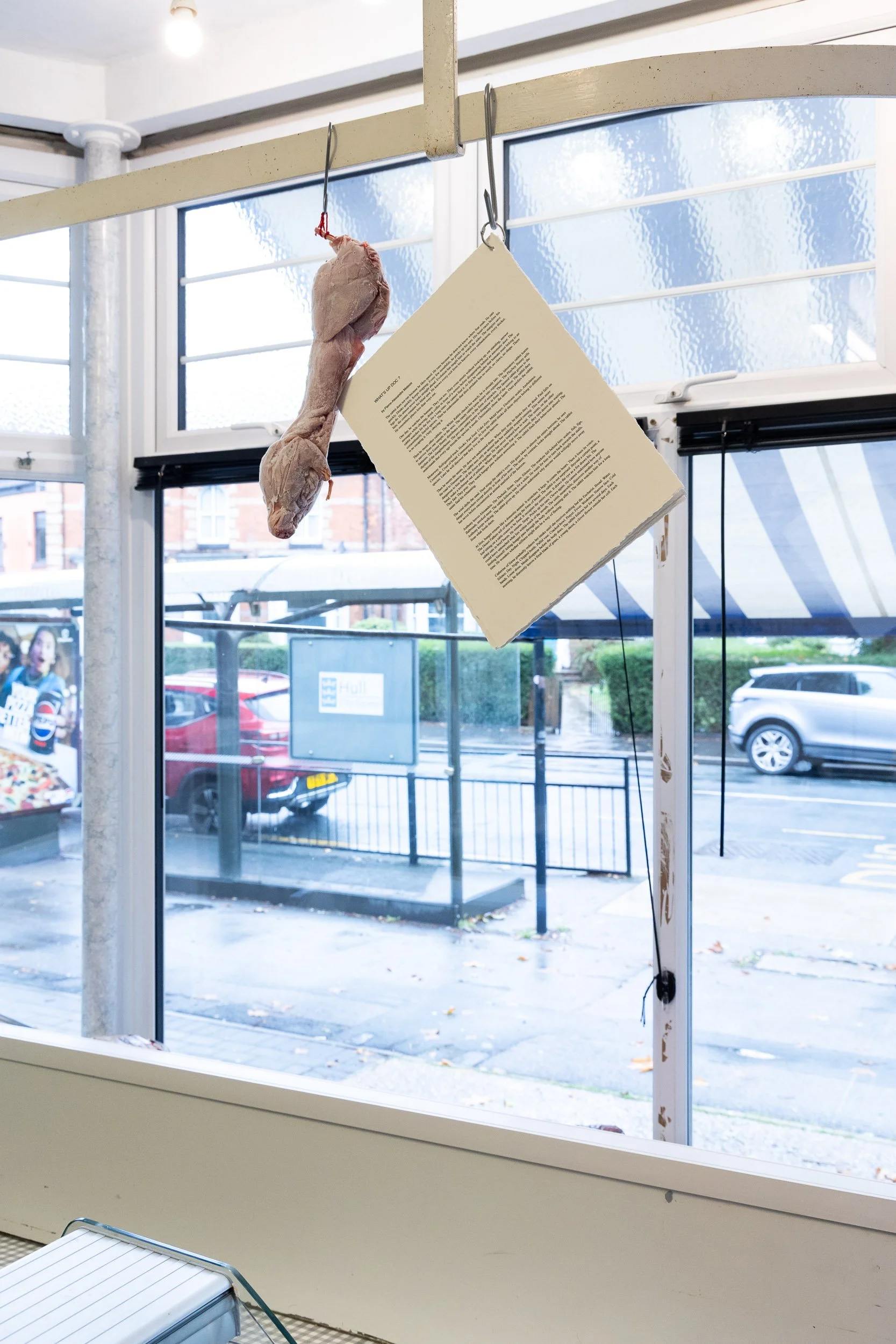
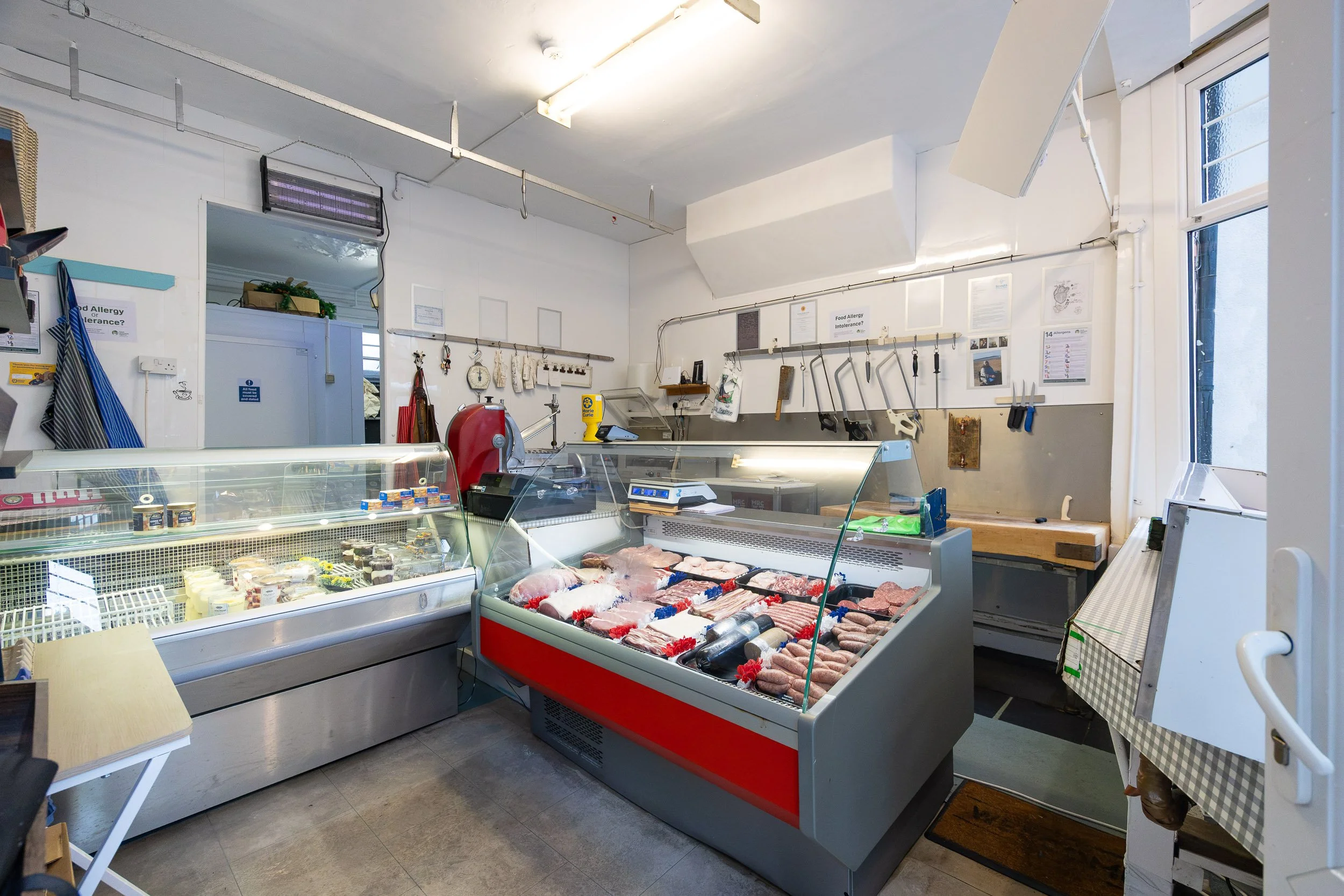
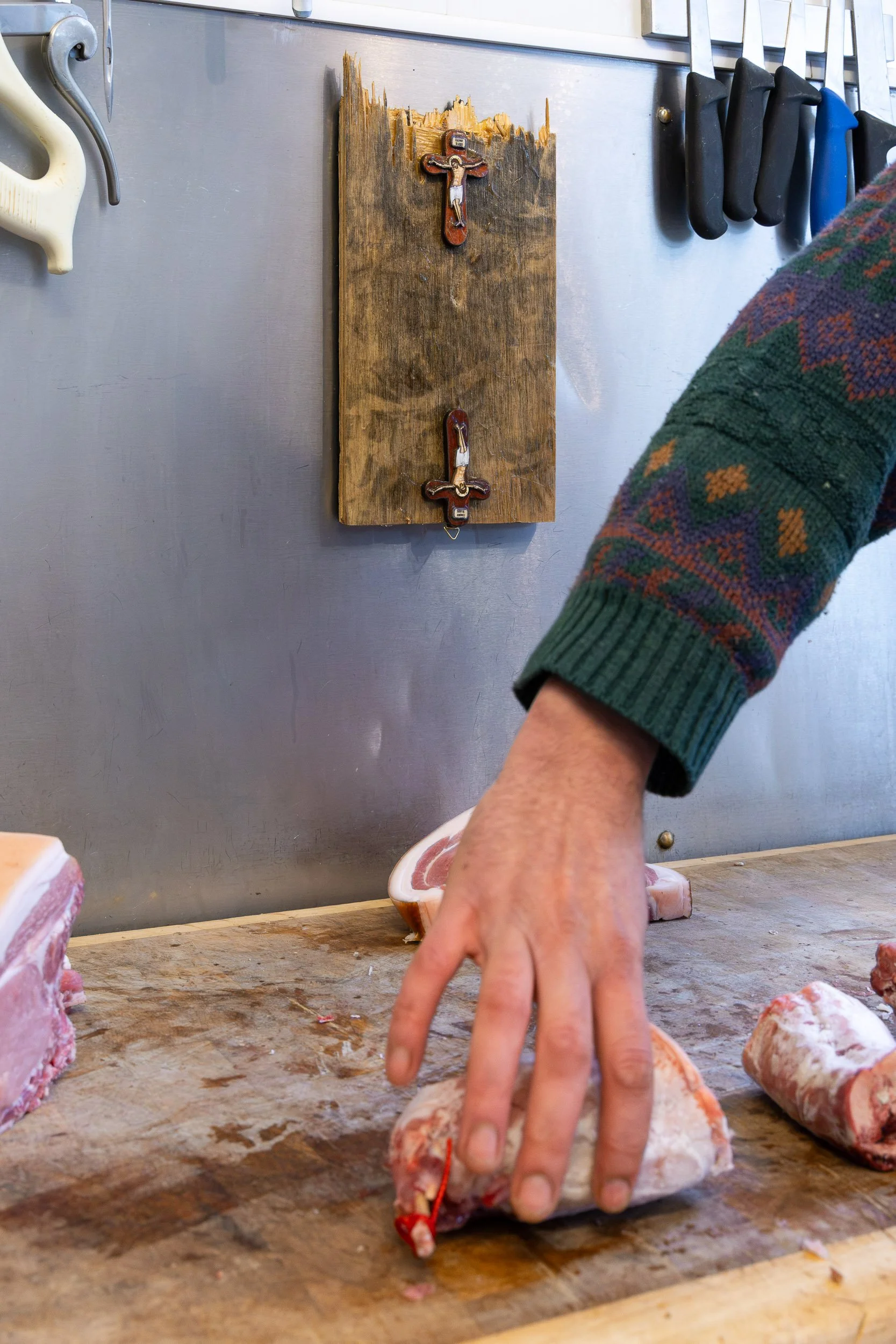
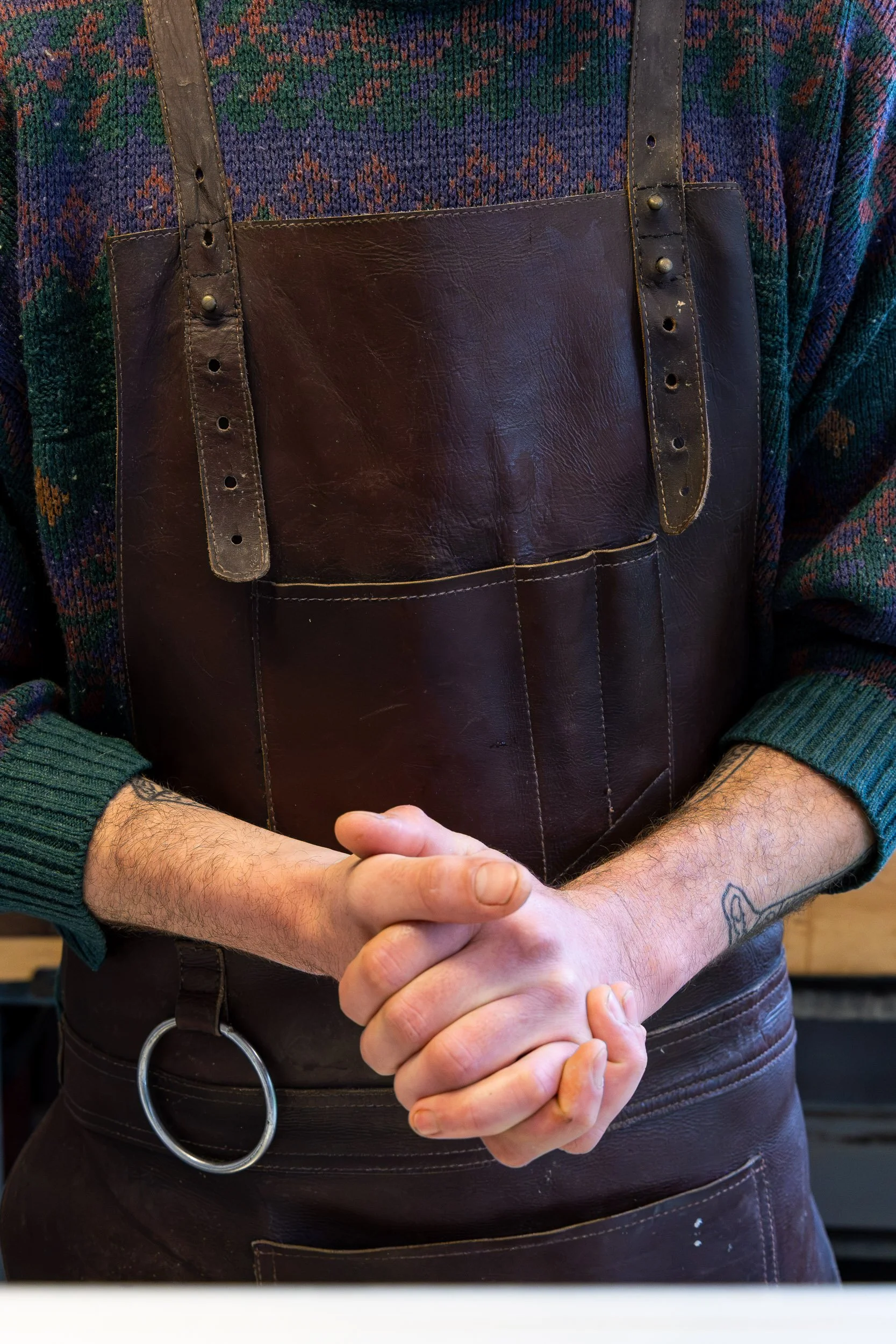
This text is presented in a former butcher's shop. The knives are gone. So are the hooks. Their logic remains. Writing sometimes proceeds by the same gesture: removing, isolating, allowing a structure to appear. All editing is a form of cutting.
As slaughterhouses move farther away from cities, meat loses its anatomy. It becomes a weight. A price. A barcode. The rabbit changes skin again. He becomes white meat. A safe food. He finds it strange that a species capable of calculating protein knows almost nothing about fear. Predators ate rabbits.
Humans now prefer their nutritional charts. Even prey ends up classified according to caloric value.
The hand disappears. The rail takes over. Suspend. Move. Immobilise. Bleed.
Chill. Package. Dispatch. In Chicago, someone realises that the true invention is not the knife but the line. Someone else immediately recognises in it the future of industry. The living is no longer cut up. It is synchronised.
The rabbit continues his research nonetheless. First hypothesis: never run in a straight line. Second hypothesis: humans have built mechanical foxes. Third hypothesis: they call this progress. He still cannot decide whether progress is a species, a predator, or simply a more polite way of dying.
The corridors curve. Blind spots disappear. The animals move with less fear.
Compassion becomes an organisational variable. Today, some pig farms resemble apartment blocks. Sensors. Cameras. Software.
The rabbit thinks he is entering a burrow. He admires the lighting. The absence of predators. The automatic doors. He thinks he has finally found a refuge. The doors close behind him. Too late, he understands that some burrows were designed by engineers.
The rabbit has never understood why humans call dying with less anxiety "animal welfare." He admits, however, that the expression is more elegant than "panic management." Humans possess a singular talent: they know how to improve suffering until it becomes presentable.
The living circulates like a parcel. The rabbit now travels vacuum-packed.
Sacrifice has not disappeared. It is no longer a gesture. It has become a problem of circulation.
A patch of condensation fades along the edge of the windowpane. The trace of a pallid breath. A shallow breath. Anaemia. The photograph could have been taken in a student bedroom, a clinic, an Airbnb flat, or a Calvin Klein campaign from
1995. There is no longer anything to tell them apart.
"Ana" no longer designates an illness. The word functions as a first name, a signature, a school. Our civilisation talks obsessively about food because perhaps it fantasises about being able to do without it. One enters less to lose weight than to learn how to look. Pro-ana communities do not merely exchange advice; they teach composition. They teach where to place a window, what time to photograph a scale, how to hold a cup, how to hide one's knuckles beneath a sleeve, how to slice an apple without ever showing that it will be eaten. They do not transmit a diet. They transmit a grammar.
Their vocabulary is remarkably restricted. Black coffee. Diet Coke. Water. Apple.
Electronic scales. Food diary. Collarbone. Oversized sweatshirt. Half-open window. Bathroom. Winter. Each object returns with the regularity of a word
learned by heart until it loses its original function. Coffee no longer wakes you up; it signifies control. Diet Coke no longer quenches thirst; it promises an industrial asceticism. The apple no longer nourishes; it demonstrates a method.
The scale no longer measures; it certifies an existence. Objects cease to be useful. They become the minimal units of a narrative.
The photographs obey a syntax of almost liturgical stability. They avoid the midday sun. They prefer north-facing rooms, bathroom fluorescents, backlighting, fogged windows, stained mirrors, white curtains diffusing light from no discernible source. Colours go on a diet before bodies do. Red disappears. Then yellow. Then green. What remains is pearl grey, clinical white, the beige of rented flats, sometimes a black that absorbs all depth. Even light learns to fast.
Clothes speak the same language. Sleeves cover the knuckles again. Sweatshirts enlarge the emptiness. Collars slip from shoulders. Socks rise to the knees. Legs draw closer together. Thighs must above all never touch. The thigh gap does not describe an anatomy; it constructs a perspective. The Renaissance organised the gaze around a vanishing point; this aesthetic organises it around a point of absence. Emptiness becomes the true subject of the image. The gaze ceases to contemplate a body; it learns to measure a distance.
Through repetition, people become interchangeable. Ribs replace faces. Collar bones replace expressions. Sleeves replace hands. Drinks replace meals.
Numbers replace sensations. Objects replace organs. The body slowly withdraws behind the signs that still claim to represent it. This is no longer an iconography of thinness. It is a semiotics of disappearance.
The rabbit spends a long time observing this strange species. He had thought animals naturally tried to make themselves look larger in order to attract a mate.
The peacock spreads its tail. The stag carries its antlers. Birds sing. Fireflies light up. Here, everything works in reverse. Colours fade. Meals disappear. Voices withdraw. Silhouettes shrink. At first he thinks he is witnessing a camouflage strategy. Then he realises that no one is trying to escape predators. Everyone is learning to become the art director of their own disappearance.
This school has its own history. The Pre-Raphaelites had already given wasting away a pictorial nobility. Tuberculosis had fashioned an ideal of translucent skin, prominent cheekbones, enormous eyes. The 1990s transferred this inheritance into fashion photography. Corinne Day replaces the lilies with direct flash. Davide Sorrenti replaces the bourgeois interior with a poorly heated bedroom. Calvin Klein discovers that fragility can become a global campaign. Then come the flash-lit flats, cigarettes, cans, oversized American Apparel sweatshirts, sheer tights, sleepless nights, mornings without breakfast, parties from which nothing remains but exhaustion. Indie sleaze does not yet celebrate disappearance; it makes it look desirable. Pro-ana communities take things one step further. They remove the party. They remove the friends. They remove sex. They remove the city. They remove even the narrative. All that remains is a method of composition.
The rabbit enrols in this school with enthusiasm. He learns quickly. First he removes the sauces. Then the colours. Then shared meals. Then birthdays. Then the other rabbits. He is taught how to frame a collarbone, how to wait for the light from a north-facing window, how to photograph a cup of coffee the way others once photographed a still life. He discovers that a body can disappear without leaving the image. The more he fades, the more coherent his profile appears. The comments praise his discipline. The algorithms reward his style.
The other rabbits ask him for advice on framing. He thought he had joined a community. He had enrolled in an art school of disappearance.
Each image corrects the one before it. One less shadow. One colour removed. A slightly longer sleeve. A slightly emptier plate. A slightly quieter room. Gradually, photography ceases to document a body; it learns to compose its absence. The rabbit studies his own images for a long time. He removes one more detail. Then another. He understands that an organism can be edited like a photograph.
Correction after correction, the living eventually comes to resemble its caption.
The rabbit looked at the final photograph for a very long time. For the first time, there was nothing more he would have removed.
The fox never returned. Long afterwards, only the photographs were found. They were perfectly composed.
There was already no rabbit left.