Richie Culver
The Persistence of Things
PACHECO, London
Text by Ben Broome
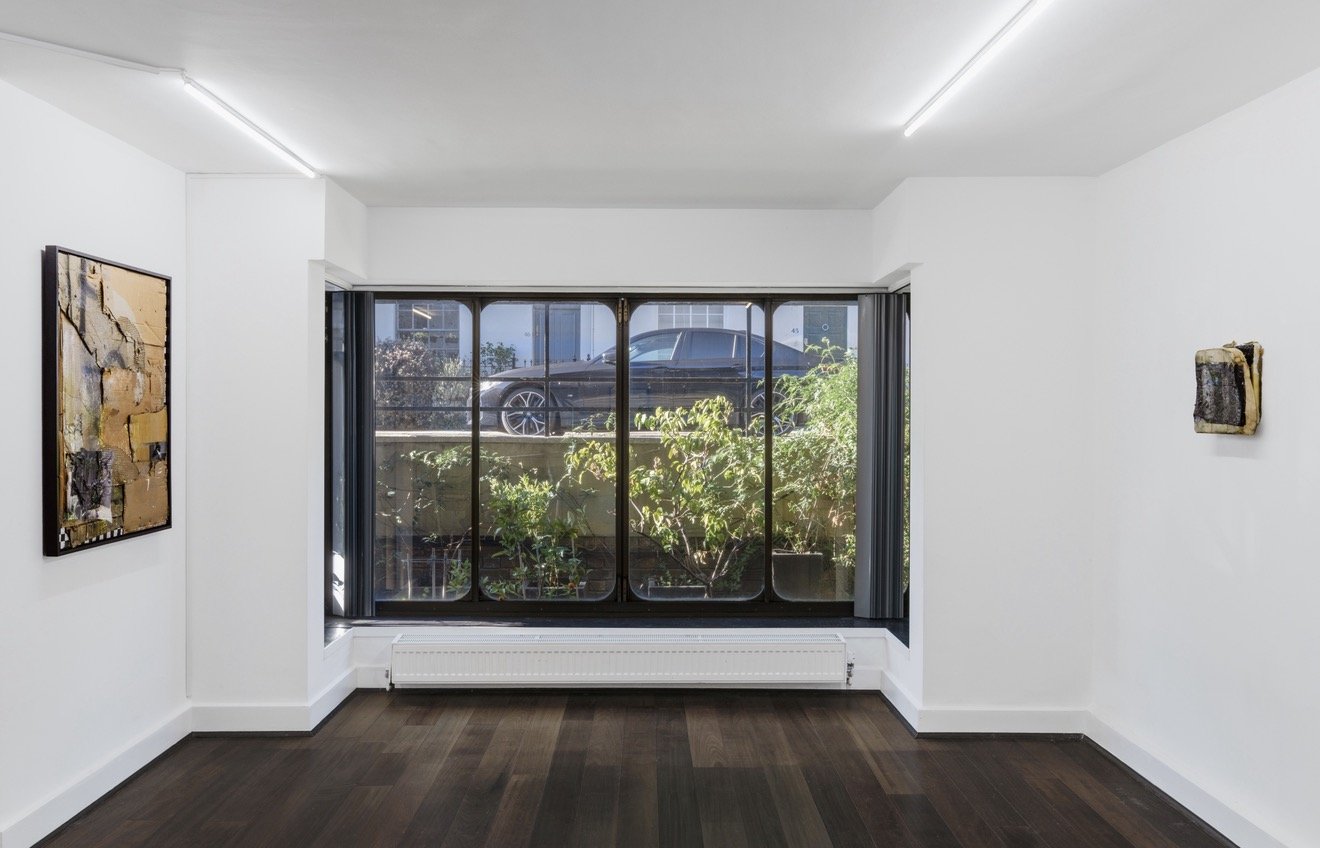
What endures, what fades away and what, in the first place, was never remembered are the mechanisms of memorialisation governing Richie Culver’s exhibition The Persistence of Things, a collection of works that seem to have unexpectedly calcified mid-stream.
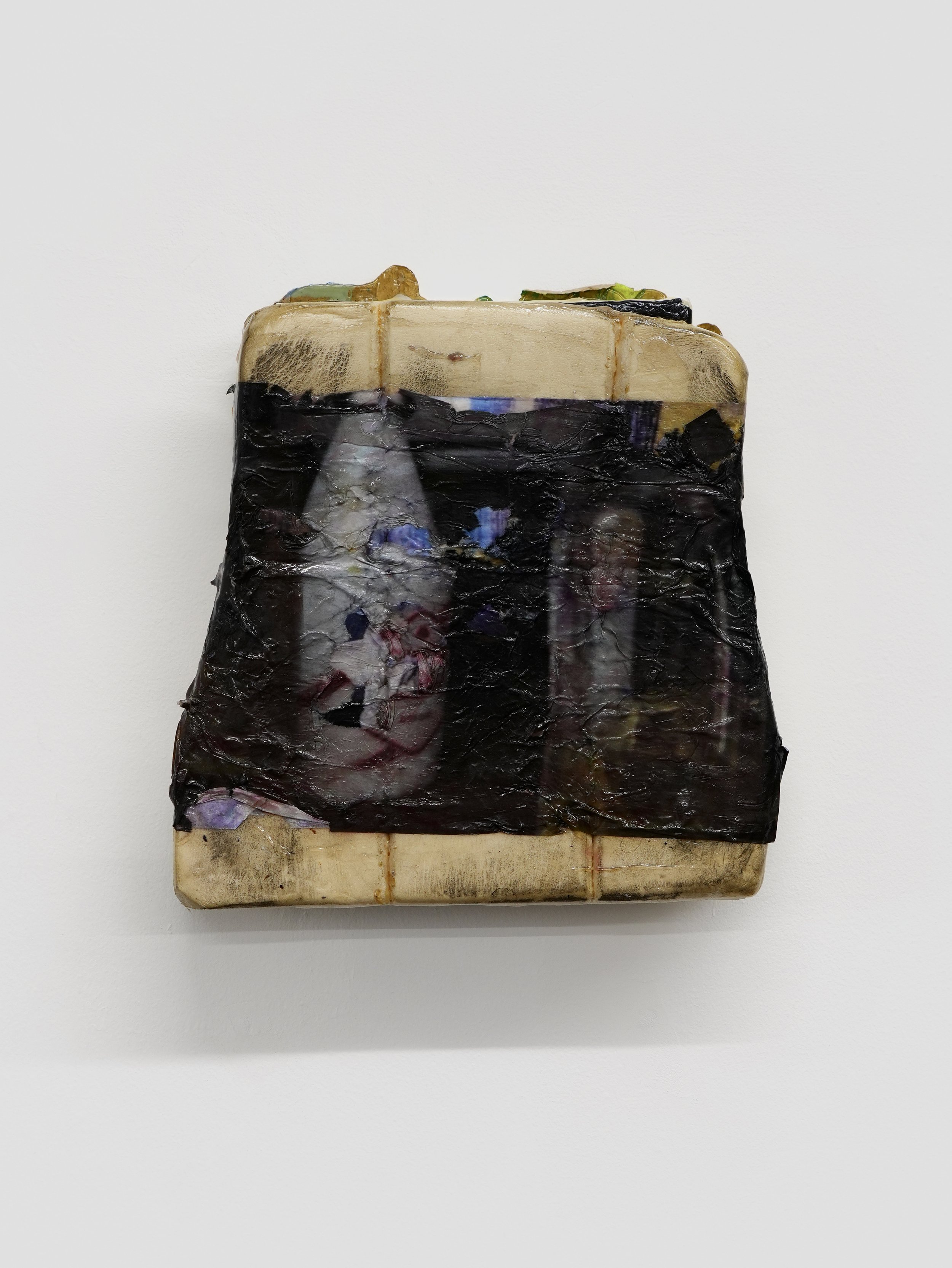
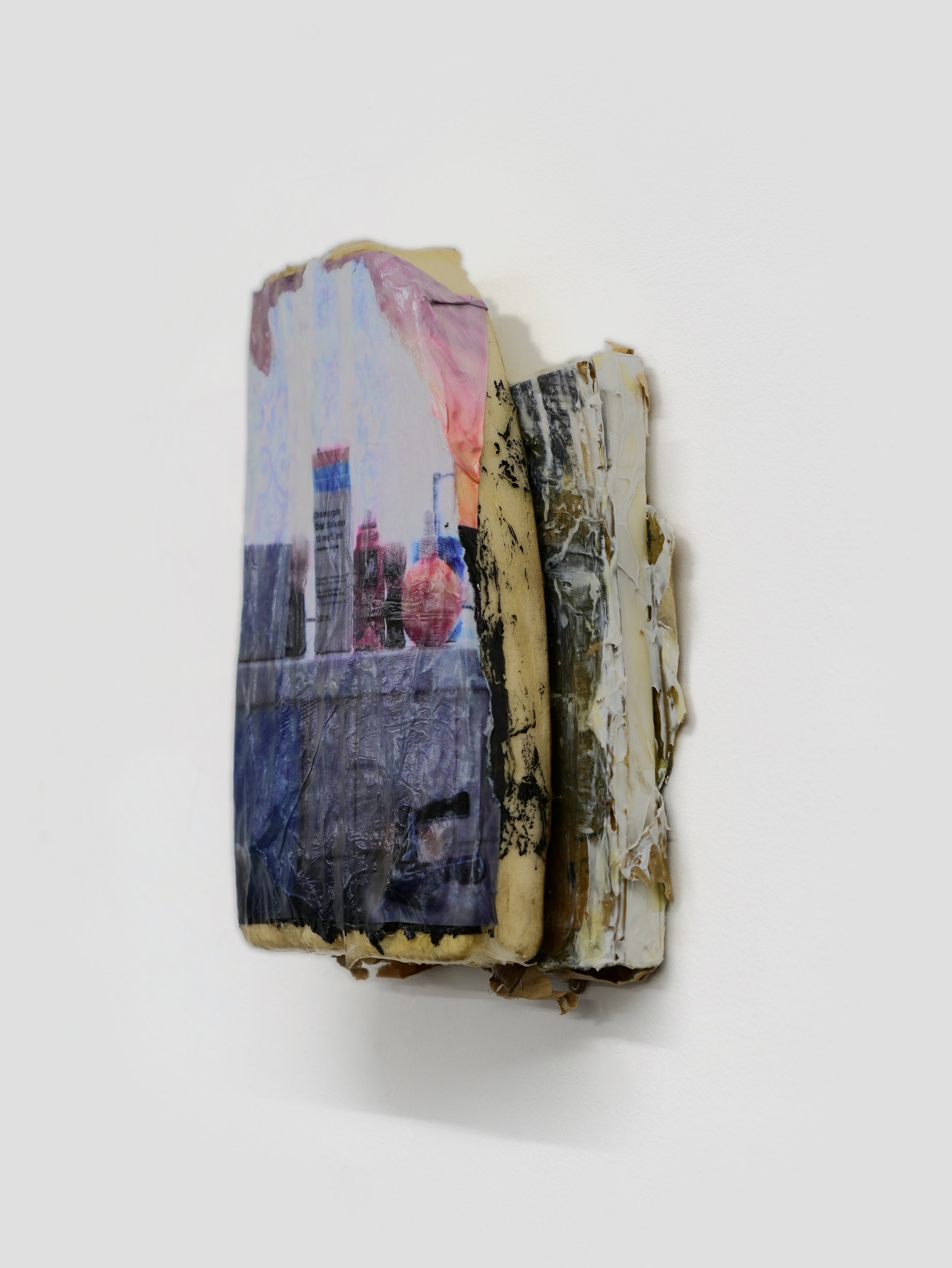
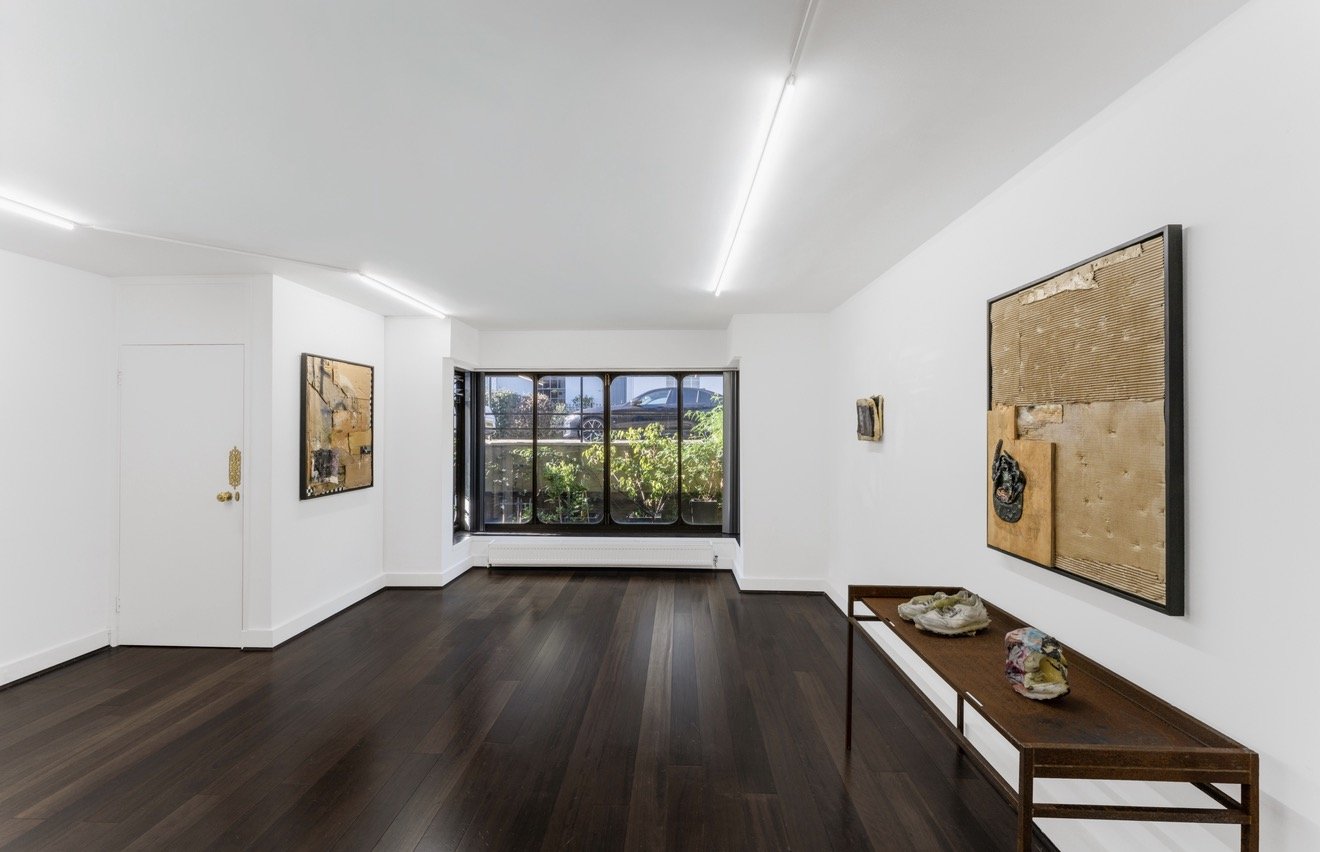
Culver said, of this series, that he didn’t want to make a photography exhibition and, formally, he hasn’t. Yet his methods are somehow photographic. There is a stoppage taking place. The objects Culver turns his hand to are held in stasis, frozen like the wavelengths of visible light entering a camera’s lens to become immortalised on light-sensitive film. Only Culver’s suspensions are made with resin – like a prehistoric insect snared in the sap of a tree – or with physical hardware sturdily fastening his memorial remnants to their chosen supports.
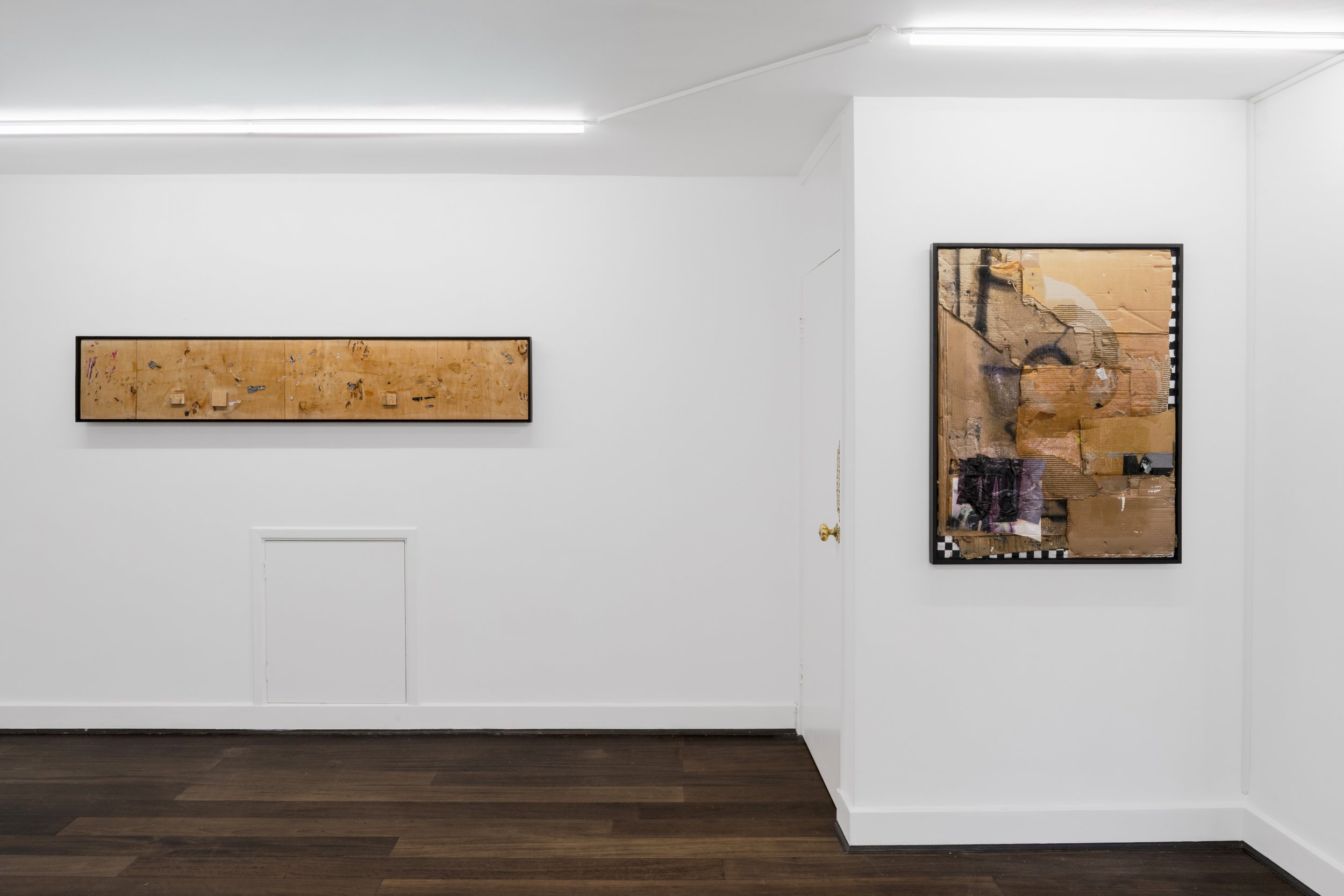
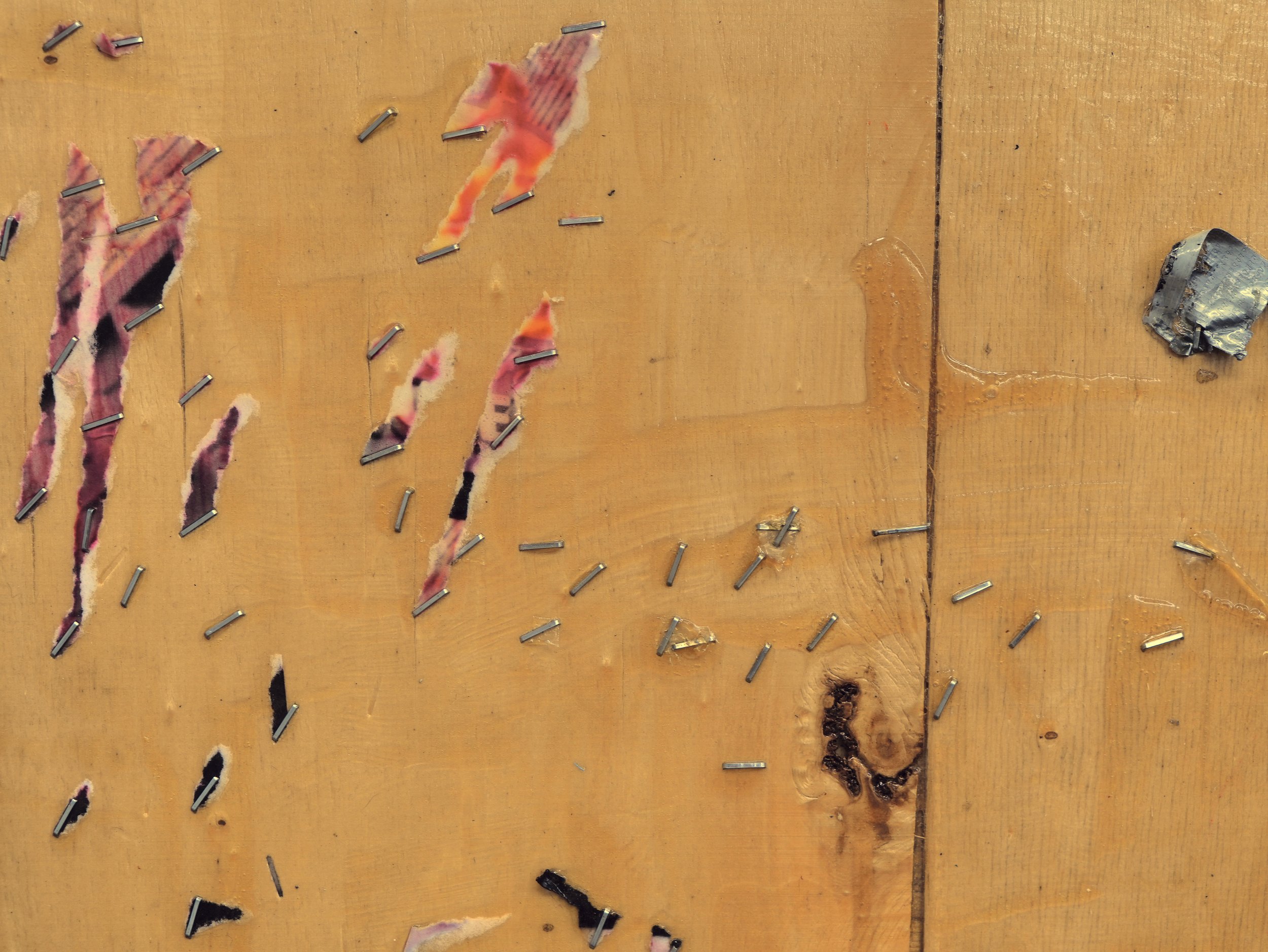
The architecture of absence (2026), a work first conceived while the artist was studying painting at the RCA, forms the starting point for his examination of absence, and of loss, which grounds this exhibition. Thinking back to stapled posters promoting gigs, raves and club nights – a sediment that encased the bulletin boards and telegraph poles of regional northern towns pre social media – Culver references battles between the near future and the recent past. Posters were pulled down and new ones put up in their place; the only trace of now depleted euphoria, held onto by a stubborn staple. As a painter uses their palette knife for both the application and removal of paint, Culver employs his stapler and printed papers similarly across this slender panel: his approach is painterly, not in the application of material, but in its withdrawal.
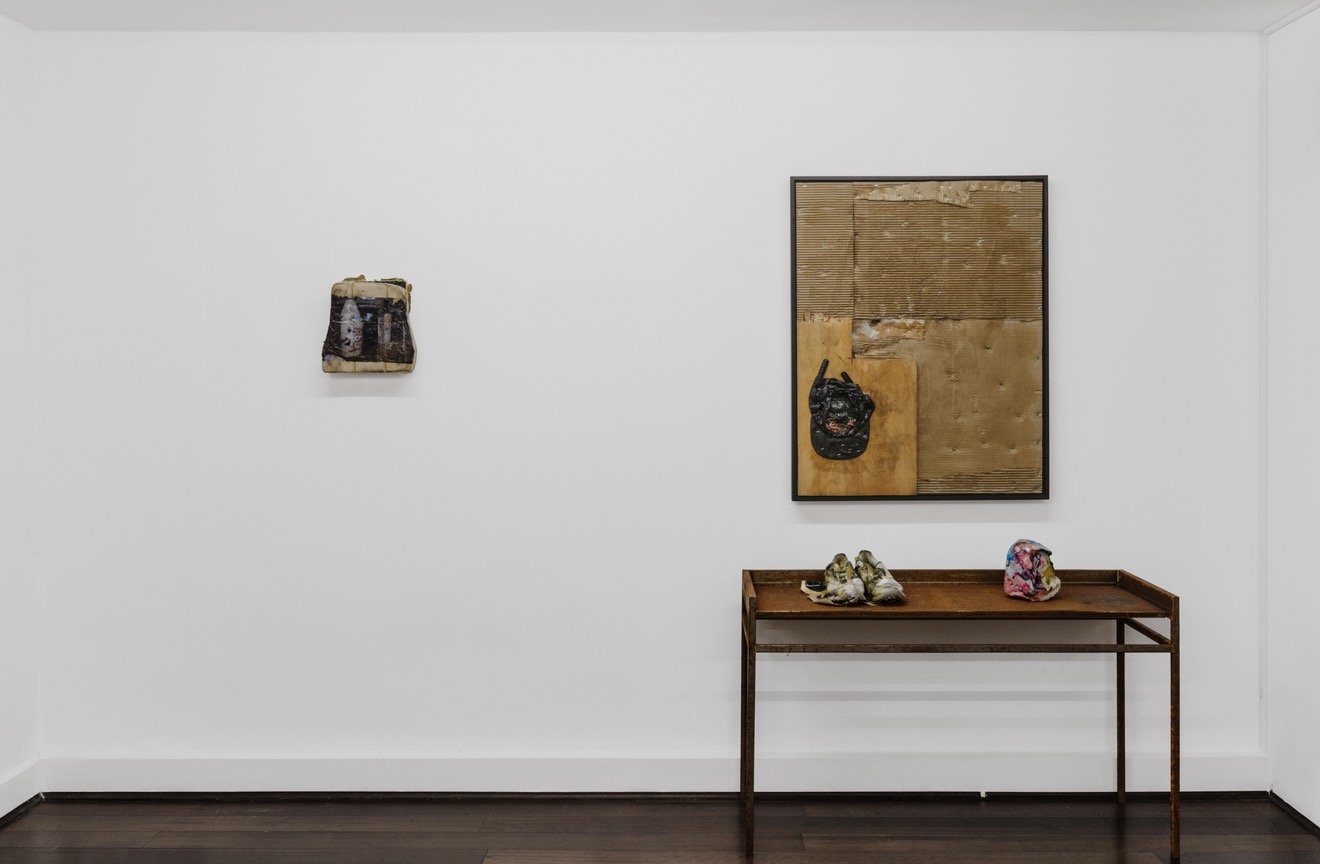
Terry’s Reeboks 1997 ish (2026) are likewise informed by an era of British club culture where your footwear choices assigned you to a community dancing to a tempo exceeding 130 BPM. Culver has obsessed over the archetypal silhouette of the Reebok Classic since he was a teenager: “When I went to Ibiza for the first time,” Culver recalls, “I remember seeing Alexander McQueen at Pacha wearing camouflage trousers and Reebok Classics. I thought, yes, this is happening.” Aware that the heedless abandon wouldn’t last forever, Culver began to collect his friends’ spent Reeboks – worn sneakers that pounded forgotten dance floors. Terry’s Reeboks, like many of the works exhibited here, swing between readymade sculpture and nostalgic artifact – neither fully conceptualised nor fully historicised by the artist.
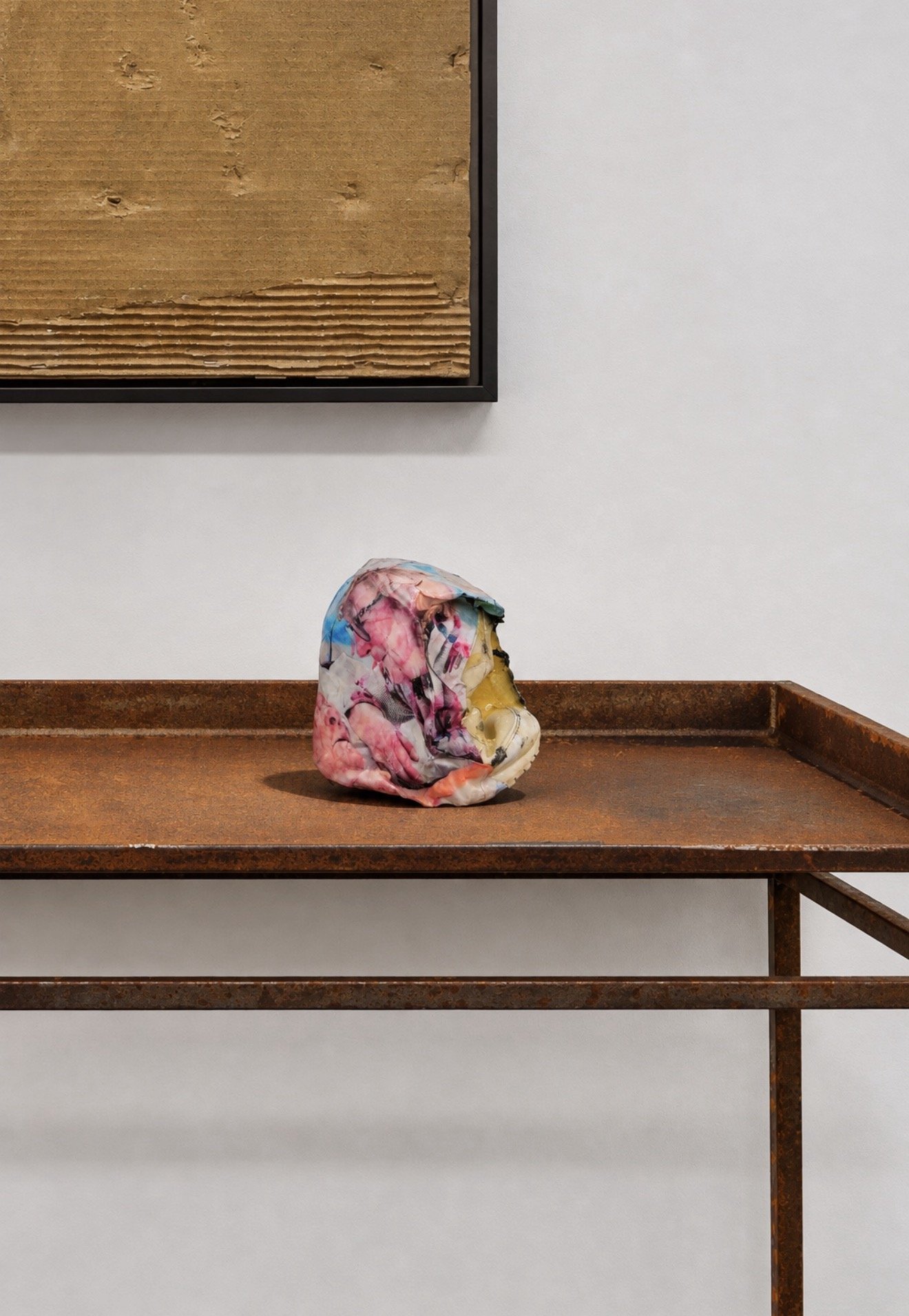
Loosely affixed to another curled Reebok Classic is a crumpled image – printed cheaply on cartridge paper. His Last Words (2026) depicts Culver’s stepfather in his final moments, doted over by the artist’s mother. Such a personal and tender moment feels incongruous on the sole of a shoe prompting the question of why Culver has made it public, presenting it as art. For the artist, however, there is no one way to mourn. As he reflects, “as men, even as little boys, we’re not taught how to speak about the act of dying, death or mourning”. His Last Words was not conceived with an audience in mind; Culver makes work for himself. “The work isn’t a celebration of death, rather, I wanted to bring the experience to life in some way”.
The Persistence of Things is nostalgic without yearning for a return to the histories that birthed the artist’s practice, with its assorted mediums crystallizing into a singular output. The works function as cultural touch points, some of which are understood and shared amongst a generation, some of which only Culver has the keys to.
Ben Broome (b. 1994) is a London-based independent curator and writer with a focus on artists working at the convergence of mediums: musical performance and performance art, film and video art.
With a human-centric approach to curation and the resulting art viewership, Broome sets out to create a borderless nucleus for artists and viewer alike, creating space for cross-generational exchange and attempting to engage new audiences, often through varied programming.